[Home] [Job] [Education] [Online Ticket] [Utility Bill] [Mobile & PC] [Sports] [Newspaper] [Bank] [Industry] [Health] [IPO]

2030 FIFA World Cup


2030 world footbal cup

The 2030 FIFA World Cup will be one of the most unique tournaments in football history because it will be hosted across three continents and six countries. ⚽🌍

Host Countries

Main hosts:

  • Morocco

  • Spain

  • Portugal

Special centenary-opening match hosts:

  • Uruguay

  • Argentina

  • Paraguay

This tournament celebrates 100 years of the FIFA World Cup, because the first World Cup was held in Uruguay in 1930. 

Tournament Format

The 2030 World Cup is currently expected to use the 48-team format introduced in 2026:

  • 48 national teams

  • 12 groups of 4 teams

  • 104 matches

  • Top 2 teams from each group + 8 best third-placed teams advance to knockout stage 

Automatic Qualification

The six host nations are expected to qualify automatically:

  • Morocco

  • Spain

  • Portugal

  • Uruguay

  • Argentina

  • Paraguay 

Interesting Facts

  • First World Cup hosted in North Africa

  • First World Cup held across three continents

  • Matches will be played in:

    • Europe

    • Africa

    • South America 

Possible Expansion Debate

There has been discussion about increasing the tournament to 64 teams for the 100-year anniversary, proposed by CONMEBOL, but FIFA has not approved it yet

āχāωāϏিāĻŦিāϰ āϏāĻ™্āĻ—ে āύ্āϝাāĻļāύাāϞ āĻŦ্āϝাংāĻ•āĻ•ে āĻāĻ•ীāĻ­ূāϤ āĻ•āϰাāϰ āωāĻĻ্āϝোāĻ—


 āĻāĻŦাāϰ āĻŦেāϏāϰāĻ•াāϰি āĻ–াāϤেāϰ āχāωāύাāχāϟেāĻĄ āĻ•āĻŽাāϰ্āĻļি⧟াāϞ āĻŦ্āϝাংāĻ• āĻŦা āχāωāϏিāĻŦিāϰ āϏāĻ™্āĻ—ে āϏংāĻ•āϟে āĻĨাāĻ•া āύ্āϝাāĻļāύাāϞ āĻŦ্āϝাংāĻ•āĻ•ে āĻāĻ•ীāĻ­ূāϤ āĻ•āϰাāϰ āωāĻĻ্āϝোāĻ— āύেāĻ“ā§Ÿা āĻšā§ŸেāĻ›ে। āφāϜ āĻŽāĻ™্āĻ—āϞāĻŦাāϰ āχāωāϏিāĻŦি āĻŦ্āϝাংāĻ• āĻ•āϰ্āϤৃāĻĒāĻ•্āώāĻ•ে āĻĄেāĻ•ে āĻ āĻŦিāώ⧟ে āωāĻĻ্āϝোāĻ— āύেāĻ“ā§Ÿাāϰ āĻ•āĻĨা āĻŦāϞেāĻ›ে āĻŦাংāϞাāĻĻেāĻļ āĻŦ্āϝাংāĻ•। āĻ āĻŦিāώ⧟ে āχāωāϏিāĻŦি āĻŦ্āϝাংāĻ•েāϰ āĻĒāϰ্āώāĻĻেāϰ āĻāĻ•āϜāύ āϏāĻĻāϏ্āϝ āĻ“ āĻŦ্āϝāĻŦāϏ্āĻĨাāĻĒāύা āĻĒāϰিāϚাāϞāĻ•েāϰ āϏāĻ™্āĻ—ে āĻŦৈāĻ āĻ• āĻ•āϰেāύ āĻ—āĻ­āϰ্āύāϰ āφāĻŦ্āĻĻুāϰ āϰāωāĻĢ āϤাāϞুāĻ•āĻĻাāϰ। āĻŦাংāϞাāĻĻেāĻļ āĻŦ্āϝাংāĻ• āϏূāϤ্āϰে āĻ āϤāĻĨ্āϝ āϜাāύা āĻ—েāĻ›ে।

 āϏূāϤ্āϰāϟি āϜাāύা⧟, āĻŦৈāĻ āĻ•ে āύ্āϝাāĻļāύাāϞ āĻŦ্āϝাংāĻ•েāϰ āĻ•েāω āωāĻĒāϏ্āĻĨিāϤ āĻ›িāϞেāύ āύা। āϤাঁāĻĻেāϰ āĻ…āύুāĻĒāϏ্āĻĨিāϤিāϤেāχ āχāωāϏিāĻŦিāĻ•ে āĻŦ্āϝাংāĻ•āϟি āĻāĻ•ীāĻ­ূāϤ āĻ•āϰাāϰ āĻŦিāώ⧟ে āωāĻĻ্āϝোāĻ— āĻ—্āϰāĻšāĻŖেāϰ āĻĒāϰাāĻŽāϰ্āĻļ āĻĻেāĻ“ā§Ÿা āĻšā§Ÿ। āύ্āϝাāĻļāύাāϞ āĻŦ্āϝাংāĻ•āĻ•ে āφāύুāώ্āĻ াāύিāĻ•āĻ­াāĻŦে āĻŦাংāϞাāĻĻেāĻļ āĻŦ্āϝাংāĻ•েāϰ āĻĒāĻ•্āώ āĻĨেāĻ•ে āĻāĻ–āύো āĻ•িāĻ›ু āϜাāύাāύো āύা āĻšāϞেāĻ“ āύ্āϝাāĻļāύাāϞ āĻŦ্āϝাংāĻ•েāϰ āĻĒāϰ্āώāĻĻে āĻ āύি⧟ে āφāϞাāĻĒ-āφāϞোāϚāύা āϚāϞāĻ›িāϞ āĻŦেāĻļ āĻ•িāĻ›ুāĻĻিāύ āϧāϰে। āĻŦ্āϝাংāĻ•āϟিāϤে āύিāϝুāĻ•্āϤ āϏ্āĻŦāϤāύ্āϤ্āϰ āĻĒāϰিāϚাāϞāĻ•েāϰা āϚাāύ, āĻāϟিāĻ•ে āĻ…āύ্āϝ āĻ•োāύো āĻŦ্āϝাংāĻ•েāϰ āϏāĻ™্āĻ—ে āĻāĻ•ীāĻ­ূāϤ āĻ•āϰāϤে। āϤāĻŦে āĻļে⧟াāϰāϧাāϰী āĻĒāϰিāϚাāϞāĻ•েāϰা āφāϰāĻ“ āĻ•িāĻ›ু āϏāĻŽā§Ÿ āĻ…āĻĒেāĻ•্āώা āĻ•āϰে āφāϰ্āĻĨিāĻ• āĻ…āĻŦāϏ্āĻĨাāϰ āωāύ্āύāϤি āĻ•āϰা āϝা⧟ āĻ•ি āύা, āϤা āĻĻেāĻ–āϤে āϚাāύ।
āĻ āύি⧟ে āĻŦ্āϝাংāĻ•āϟিāϰ āĻĒāϰ্āώāĻĻ āĻĻ্āĻŦিāϧাāĻŦিāĻ­āĻ•্āϤ।

universal pension scheme from Bank 2024

Any Bangladeshi citizen between the ages of 18 and 50 years can apply for the benefit of universal pension. You have to deposit money every month, this facility will not be available if you do not deposit money for a minimum of 10 years. After the age of 60, you will start getting a pension. 

Considering the occupation and social status of the people, the government has initially announced four schemes. Schemes can be selected according to their location from these four schemes, Prabasti, Progress, Security and Equality.

The individual has to apply online for inclusion in the universal pension scheme. For this, a website called 'Upapension' (https://www.upension.gov.bd) has already been launched. Through this website, the opportunity has been created for anyone to be included in the pension program from Thursday (August 17). 
 
 How to get registered :
To be included in the Universal Pension Scheme, you have to register on the UPpension website. "If you apply with incorrect information, the application will be rejected and the deposited amount will not be refundable."
 
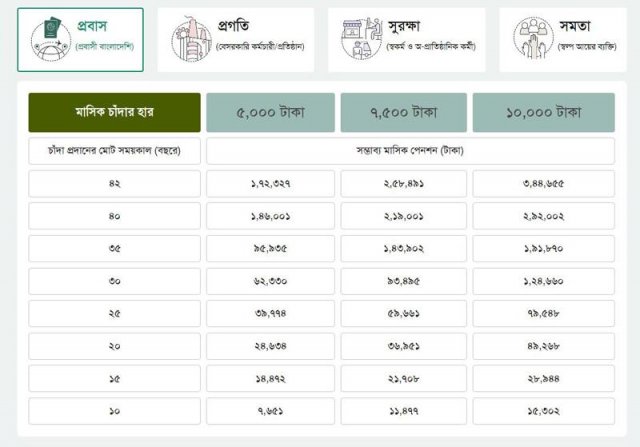
A certification page will appear first in the registration process; "I hereby certify that I am not working in any government, semi-government, autonomous or state-owned organization. We do not take benefits from any kind of government or autonomous organization outside the universal pension scheme. I don't take any kind of allowance under the social security program." Click on the "I Agree" section at the bottom of this page to go to the second page to start the registration process. Here the applicant has to choose the applicable scheme from these four schemes – Expatriate, Equality, Security or Progress. At the same time, 10, 13 or 17 digit NID number, date of birth, mobile number, email ID should be written. Then write the captcha (a special security system used in information technology where you have to type a special text) at the bottom of the page and go to the next page. After entering the captcha, an OTP or one-time secret number will appear in the applicant's mobile number and email, which will go to the next step with the form. The next step in the registration process will be the personal information page. According to the NID of the person, NID number, photo, applicant's Bengali and English name, father's name, mother's name, current and permanent address will be automatically displayed (since this information has been given through NID number on the previous page). However, here the applicant's annual income will be written and the name of the profession, own division, district and upazila will be selected. Professions like teachers, non-government employees, small businessmen, business, day laborers, lawyers, journalists, etc. are mentioned in the profession selection room. You have to choose your profession from there. Once all the text is done, go to the next 'Scheme Information' page. When the scheme information page appears, you have to select the monthly subscription amount and the type of subscription payment. There are three options – monthly, quarterly and annually – in the type of subscription payment. Then you have to go to the bank information step. On the bank information page, the applicant's bank account name and number, account type (savings or current), routing number, bank name (in Bengali) and bank branch name (in English) should be written. Then go to the next nominee information page. Go to the nominee information page and add the nominee with the nominee's national identity card number and date of birth. Multiple nominees can be added here. At this time, go to the latest 'Complete Form' step with the nominee's mobile number, relationship with the nominee, the nominee's availability rate (if there is more than one nominee). This is the last step of registration. In this step, the previously filled personal information, scheme information, bank information and nominee information will be shown. If there is a mistake, then go back to the beginning and make the necessary corrections to the information. And if all the information is correct, then the application process should be completed by agreeing to it. At this time, the applicant can also download the complete application. Note that in the entire process of registration, you can not go back without completing all the page work. If you go backwards, you have to start all over again. However, in that case, the old information will be saved automatically; You don't have to rewrite. Deposit Rate To get a pension, you have to pay an uninterrupted subscription for 10 years. There is a difference in the rate of subscription deposit and the rate of receiving pension from scheme to scheme. In this case, a maximum of Tk 10,000 to a minimum of Tk 1,000 can be paid in a month. However, out of the Rs 1,000 subscription for the equality category, the individual will pay Rs 500 and another Rs 500 will be given by the government as grant. The longer the person subscribes under the Universal Pension Scheme, the higher the monthly pension will be paid. In this case, the maximum monthly pension of Tk 3 lakh 44 thousand 655 and the minimum pension of Tk 1,530 will be available depending on the scheme. What are the four schemes Of the four types of pension programs announced by the government, three types have been fixed in the Probas and Pragati schemes, four types in the protection scheme and one type of subscription in the equality scheme of citizens living below the poverty line. In each scheme, an equal amount of pension will be paid against the fixed contribution payable at the specified time. That is, if someone donates Tk 5,000 for 42 years under the expatriate, progress and protection scheme, then all of them will get a pension of Tk 1,72,327 per month.
  11
 
In the expatriate scheme, 10,000, 7,500 and 5,000 subscriptions can be given per month. If an 18-year-old expatriate deposits Tk 10,000 a month in the expatriate program, then after 42 years (when he turns 60) he will get Tk 3,44,655 per month. If the expatriate pays 10 years at the same rate, he will get a monthly pension of Tk 15,302. If an 18-year-old expatriate deposits Tk 5,000 a month in the expatriate program, then after 42 years (when he turns 60) he will get Tk 1,72,327 per month. If the expatriate pays the same rate for 10 years, he will get a monthly pension of Tk 7,651.https://cdn.banglatribune.net/contents/cache/images/640x0x1/uploads/media/2023/08/18/-bd883e228c52f4cdc4d625ae9126c7a9.jpg Under the Pragati scheme (employees of private organizations), if an 18-year-old private employee deposits Rs 5,000 per month, he will get Rs 1,72,327 per month after 42 years. At the same rate, if you donate for 10 years, you will get a pension of Tk 7,651 per month. https://cdn.banglatribune.net/contents/cache/images/640x0x1/uploads/media/2023/08/18/-d5e09c7de4c6b85ae5b4b8dd26243ec6.jpg Under the protection scheme (self-employed citizens), if an 18-year-old person contributes Rs 5,000 per month to the pension, then at the end of 42 years, he will also get Tk 1,72,327 per month. At the same rate, if you donate for 10 years, you will get a pension of Tk 7,651 per month. https://cdn.banglatribune.net/contents/cache/images/640x0x1/uploads/media/2023/08/18/-598b539639616a1ccc57d932f7c9c4cc.jpg However, the government will pay half of the monthly subscription to the participants of the equality pension program for low-income people. In the equality programme, a participant will have to pay Rs 500 per month, while the government will pay another Rs 500. In this way, if a person deposits Tk 1,000 for 42 years, then he will get a monthly pension of Tk 34,465 at the end of the term. At the same rate, if you donate for 10 years, you will get a monthly pension of Tk 1,530. According to the rules, the pension subscription has to be deposited in the bank account designated by the National Pension Authority. Deposits can be made through online banks, credit cards, debit cards, mobile financial service providers (MFS) institutions and any branch of scheduled banks. What papers do you need? To be included in the pension program, the person must have a National Identity Card (NID). However, those who do not have NID can be registered on the basis of passport temporarily. However, the NID will have to be submitted to the government as soon as possible. Those who are enjoying benefits under the social security program can also come under the pension if they want. However, in this case, they will have to exclude the benefits they enjoy under the social security program. A Unique Identity Number (UID) will be given against each application. The registered mobile number of the applicant mentioned in the application and the UID number, subscription rate and monthly subscription date will be communicated through automated email in case of non-residents. According to the rules, people above 50 years of age can also be included in any type of pension scheme under special consideration. However, what will be the pension program for people above 50 is yet to be finalized. Meanwhile, the Finance Ministry said in a notification on Thursday that government employees can also be included in this pension scheme. However, it is not yet known what type of scheme they will be covered. Later, all the information including the pension scheme of the government employees will be informed through the publication of the gazette. How much return for less deposit The pension will be available at least 2.3 to 12.3 times the contribution payable in the universal pension scheme. The amount of pension depends mainly on the duration of the subscription. In this case, if you donate for 42 years, the pension will be at least 12.30 times the amount payable. On the other hand, if you donate for 10 years, it will be 2.30 times. That is, the longer the subscription is deposited, the higher the rate of pension. Apart from this, if the pensioner lives longer, the rate will increase further. If a person pays subscription from 10 to 42 years, he will start getting monthly pension from the completion of 60 years of age. He will get a pension for life. If a person dies before attaining the age of 75 years during the pension period, his nominee or heirs will get pension for the remaining period. That is, they will continue to receive pension for as many months as they are left from the period of 75 years from the person's death. In this case, even if the pensioner dies, the government will have to continue paying pension for 15 years. As a result, it is clear that everyone will get a pension for at least 15 years. At the rate of 10,000 per month, Tk 12 lakh will have to be donated in 10 years. On the contrary, if the pension is received for 15 years, its amount comes to Tk 27 lakh 54 thousand 360. Similarly, in the Rs 10,000 scheme, if you pay Rs 18 lakh in 15 years, the pension will be at least Rs 55,55,920 (2.89 times). In 20 years, the pension will come to 88 lakh 68 thousand 240 taka (3.70 times) by donating Tk 24 lakh. In 25 years, a pension of Tk 30 lakh will come to Tk 1 crore 43 lakh 2 thousand 240 (4.77 times). In 30 years, the pension will come to Tk 2 crore 24 lakh 38 thousand 800 (6.23 times) in a subscription of Tk 36 lakh. If you donate Tk 42 lakh in 35 years, the minimum pension will be Tk 3 crore 45 lakh 36 thousand 600 (8.22 times) and in 40 years, the pension will be Tk 5 crore 25 lakh 60 thousand 350 (10.95 times) with a subscription of Tk 48 lakh. Apart from expatriates, pension will be available at the same rate as the amount and duration of the subscription of other schemes.

āĻŽুāϜিāĻŦāĻŦāϰ্āώ’āϰ āĻŦāĻĻāϞে āϞেāĻ–া āĻ›িāϞ ‘āĻŽুāϜিāĻŦāϰ্āώ’


 āĻŦিāϜāϝ়েāϰ āϏুāĻŦāϰ্āĻŖāϜ⧟āύ্āϤীāϤে āĻĻেāĻļāĻŦ্āϝাāĻĒী āĻāĻ•āϝোāĻ—ে āϏāĻ•āϞāĻ•ে āĻļāĻĒāĻĨ āĻŦাāĻ•্āϝ āĻĒাāĻ  āĻ•āϰি⧟েāĻ›েāύ āĻĒ্āϰāϧাāύāĻŽāύ্āϤ্āϰী। āĻŦৃāĻšāϏ্āĻĒāϤিāĻŦাāϰ āĻŦিāĻ•েāϞ āϏা⧜ে āϚাāϰāϟা⧟ āϜাāϤীāϝ় āϏংāϏāĻĻেāϰ āĻĻāĻ•্āώিāĻŖ āĻĒ্āϞাāϜা āĻĨেāĻ•ে āĻ āĻļāĻĒāĻĨ āĻŦাāĻ•্āϝ āĻĒাāĻ  āĻ•āϰাāύ āϤিāύি। āĻ āϏāĻŽā§Ÿ āϤাāϰ āϏাāĻĨে āĻ›িāϞেāύ āĻŦāĻ™্āĻ—āĻŦāύ্āϧুāϰ āĻ•āύিāώ্āĻ  āĻ•āύ্āϝা āĻļেāĻ– āϰেāĻšাāύাāĻ“।

‘āĻŽāĻšাāĻŦিāϜāϝ়েāϰ āĻŽāĻšাāύাāϝ়āĻ•’ āĻĒ্āϰāϤিāĻĒাāĻĻ্āϝে āφāϝ়োāϜিāϤ āϜāĻŽāĻ•াāϞো āĻ āĻ…āύুāώ্āĻ াāύে āωāĻĒāϏ্āĻĨিāϤ āĻ›িāϞেāύ āĻŦাংāϞাāĻĻেāĻļ āĻ“ āĻ­াāϰāϤেāϰ āϰাāώ্āϟ্āϰāĻĒāϤিāϏāĻš āĻŦিāĻ­িāύ্āύ āĻĻেāĻļেāϰ āĻ…āϤিāĻĨিāϰা। āĻŦিāϜ⧟েāϰ āϏুāĻŦāϰ্āĻŖāϜ⧟āύ্āϤীāϤে āĻĻেāĻļāĻŦাāϏী āϏ্āĻŦāĻ­াāĻŦāϤāχ āωāϚ্āĻ›্āĻŦāϏিāϤ। āĻ•িāύ্āϤু āĻāϰāχ āĻŽাāĻে āϏাāĻŽাāϜিāĻ• āϝোāĻ—াāϝোāĻ— āĻŽাāϧ্āϝāĻŽে āĻĻেāĻ–া āĻ—েāĻ›ে āϤীāĻŦ্āϰ āĻĒ্āϰāϤিāĻ•্āϰি⧟া; āĻļāĻĒāĻĨ āĻ…āύুāώ্āĻ াāύেāϰ āĻĄা⧟াāϏে āϝে ‘āĻŽুāϜিāĻŦāĻŦāϰ্āώ’ āĻŦাāύাāύāχ āĻ­ুāϞ āϞেāĻ–া! āĻĄাāϝ়াāϏে ‘āĻŽুāϜিāĻŦāĻŦāϰ্āώ’āϰ āĻŦāĻĻāϞে āϞেāĻ–া āĻ›িāϞ ‘āĻŽুāϜিāĻŦāϰ্āώ’! āĻ…āϰ্āĻĨাā§Ž āĻāĻ•āϟি ‘āĻŦ’ āĻŦাāĻĻ āĻĒ⧜ে āĻ—েāĻ›ে। āĻŦাংāϞাāĻĻেāĻļেāϰ āϏ্āĻĨāĻĒāϤি āϜাāϤিāϰ āĻĒিāϤা āĻŦāĻ™্āĻ—āĻŦāύ্āϧু āĻļেāĻ– āĻŽুāϜিāĻŦুāϰ āϰāĻšāĻŽাāύেāϰ āύাāĻŽে āĻĻে⧟া āĻŦāϰ্āώেāϰ āĻ­ুāϞ āĻŦাāύাāύ āĻŽেāύে āύিāϤে āĻĒাāϰāĻ›েāύ āύা āĻ…āύেāĻ•েāχ।

āĻ āύি⧟ে āϏাāĻŽাāϜিāĻ• āϝোāĻ—াāϝোāĻ— āĻŽাāϧ্āϝāĻŽে āĻĻেāĻ–া āĻĻি⧟েāĻ›ে āϤীāĻŦ্āϰ āĻĒ্āϰāϤিāĻ•্āϰি⧟া। āĻāĻ•āϜāύ āϏাংāĻŦাāĻĻিāĻ• āϞিāĻ–েāĻ›েāύ, ‘āφāĻŽি āĻŦাāύাāύāĻŦিāĻĻ āύāχ। āϤāĻŦে āϏাāϧাāϰāĻŖ āϜ্āĻžাāύ āĻŦāϞে ‘āĻŽুāϜিāĻŦāĻŦāϰ্āώ’āχ āĻšāĻŦে।’ āĻ…āύ্āϝāĻĻিāĻ•ে, āĻāĻ•āϜāύ āϰাāϜāύীāϤিāĻŦিāĻĻ āϞিāĻ–েāĻ›েāύ, ‘āĻāϟা āĻŦāϞা āĻ•ি āĻ…āĻĒāϰাāϧ āĻšāĻŦে āϝে āĻŽাāύāύীāϝ় āĻĒ্āϰāϧাāύāĻŽāύ্āϤ্āϰীāϰ āφāĻļেāĻĒাāĻļে āϝাāϰা āφāĻ›ে āϤাāĻĻেāϰ āĻĻাāϝ়িāϤ্āĻŦ āĻĒাāϞāύে āφāύ্āϤāϰিāĻ•āϤাāϰ āĻ…āĻ­াāĻŦ āφāĻ›ে? āĻŽুāϜিāĻŦāĻŦāϰ্āώ āϝে āĻŽুāϜিāĻŦāϰ্āώ āĻšāϝ়ে āĻ—েāϞ āĻāϟা āĻĻেāĻ–াāϰ āĻŽāϤো āĻāĻ•āϜāύ āĻŽাāύুāώāĻ“ āĻ•ি āφāĻļেāĻĒাāĻļে āĻ›িāϞ āύা?’

āϜাāϤীāϝ় āĻāχ āĻ…āύুāώ্āĻ াāύেāϰ āĻĒ্āϰāϏ্āϤুāϤি āϚāϞāĻ›িāϞ āĻŦāĻšুāĻĻিāύ āφāĻ— āĻĨেāĻ•ে। āĻāϰāĻĒāϰāĻ“ āĻĒ্āϰāϧাāύāĻŽāύ্āϤ্āϰীāϰ āĻĄাāϝ়াāϏে āĻāĻŽāύ āĻ­ুāϞ āĻŽেāύে āύেāϝ়া āϝাāϝ় āύা āĻŦāϞে āĻ•্āώোāĻ­ āĻĒ্āϰāĻ•াāĻļ āĻ•āϰেāĻ›েāύ āĻ…āύেāĻ•ে। āĻ•েāω āĻ•েāω āφāĻŦাāϰ āĻāχ āĻ­ুāϞāĻ•ে āĻŦ⧜ āĻ•āϰে āĻĻেāĻ–াāϰ āĻĒāĻ•্āώে āύāύ। āϤাāϰা āĻŦāϞāĻ›েāύ, āĻ…āϤীāϤেāĻ“ āϏāϰāĻ•াāϰি-āĻŦেāϏāϰāĻ•াāϰি āĻŦিāĻ­িāύ্āύ āϜা⧟āĻ—া⧟ ‘āĻŽুāϜিāĻŦāϰ্āώ’ āĻļāĻŦ্āĻĻāϟি āĻŦ্āϝāĻŦāĻšাāϰ āĻ•āϰা āĻšā§ŸেāĻ›ে। āĻĢāϞে āĻāϟি āĻ­ুāϞ āĻšāϞে āĻ…āύেāĻ•āĻĻিāύ āϧāϰেāχ āϏেāχ āĻ­ুāϞ āĻŦিāĻ­িāύ্āύ āϜা⧟āĻ—া⧟ āĻšā§Ÿে āĻāϏেāĻ›ে।

āĻ āĻŦিāώ⧟ে āϜাāύāϤে āϚাāχāϞে āĻŦাংāϞা āĻŦিāĻ­াāĻ—েāϰ āĻāĻ•াāϧিāĻ• āĻļিāĻ•্āώāĻ•-āĻļিāĻ•্āώাāϰ্āĻĨী āĻāϟিāĻ•ে āĻ­ুāϞ āĻšিāϏেāĻŦেāχ āϚিāĻš্āύিāϤ āĻ•āϰেāĻ›েāύ। āϤাāĻĻেāϰ āĻŽāϤে āϏāύ্āϧি āĻ…āĻĨāĻŦা āϏāĻŽাāϏেāϰ āĻ•োāύো āύি⧟āĻŽেāχ āĻāχ āĻŦাāύাāύ āϏিāĻĻ্āϧ āύ⧟।

āĻāĻŦি āĻŦ্āϝাংāĻ•েāϰ ā§§ā§Ŧā§Ŧ āĻ•োāϟি āϟাāĻ•া āĻĻুāϰ্āύীāϤি, ā§§ā§Ģ āĻ•āϰ্āĻŽāĻ•āϰ্āϤাāĻ•ে āĻ—্āϰেāĻĢāϤাāϰেāϰ āύিāϰ্āĻĻেāĻļ

 ā§§ā§Ŧā§Ŧ āĻ•োāϟি āϟাāĻ•া āĻĻুāϰ্āύীāϤিāϰ āĻŽাāĻŽāϞা⧟ āĻāĻŦি āĻŦ্āϝাংāĻ•েāϰ ā§§ā§Ģ āĻ•āϰ্āĻŽāĻ•āϰ্āϤাāĻ•ে āĻ—্āϰেāĻĢāϤাāϰেāϰ āύিāϰ্āĻĻেāĻļ āĻĻি⧟েāĻ›েāύ āĻšাāχāĻ•োāϰ্āϟ।  āĻĒাāĻļাāĻĒাāĻļি āĻāχ ā§§ā§Ģ āϜāύ āϝেāύ āĻŦিāĻĻেāĻļে āĻĒাāϞি⧟ে āϝেāϤে āύা āĻĒাāϰে āϏে āϜāύ্āϝ āύিāώেāϧাāϜ্āĻžাāĻĻেāĻļ āĻĻি⧟েāĻ›েāύ āφāĻĻাāϞāϤ।

āĻŽāĻ™্āĻ—āϞāĻŦাāϰ āĻŦিāϚাāϰāĻĒāϤি āĻŽো. āύāϜāϰুāϞ āχāϏāϞাāĻŽ āϤাāϞুāĻ•āĻĻাāϰ āĻ“ āĻŦিāϚাāϰāĻĒāϤি āĻ āĻ•ে āĻāĻŽ āϜāĻšিāϰুāϞ āĻšāĻ•েāϰ āĻšাāχāĻ•োāϰ্āϟ āĻŦেāĻž্āϚ āĻāχ āφāĻĻেāĻļ āĻĻেāύ।


āφāĻĻাāϞāϤে āφāϏাāĻŽিāĻĒāĻ•্āώে āϜাāĻŽিāύ āφāĻŦেāĻĻāύেāϰ āĻļুāύাāύিāϤে āĻ›িāϞেāύ āφāχāύāϜীāĻŦী āĻ—োāϞাāĻŽ āφāĻŦ্āĻŦাāϏ āĻĻুāϞাāϞ।

āĻĻুāĻĻāĻ•েāϰ āĻĒāĻ•্āώে āĻ›িāϞেāύ āφāχāύāϜীāĻŦী āĻŽো. āĻ–ুāϰāĻļীāĻĻ āφāϞāĻŽ āĻ–াāύ। āϰাāώ্āϟ্āϰāĻĒāĻ•্āώে āĻ›িāϞেāύ āĻĄেāĻĒুāϟি āĻ…্āϝাāϟāϰ্āύি āϜেāύাāϰেāϞ āĻ āĻ•ে āĻāĻŽ āφāĻŽিāύ āωāĻĻ্āĻĻিāύ āĻŽাāύিāĻ•।
āĻŽাāĻŽāϞাāϰ ā§§ā§Ģ āφāϏাāĻŽি āĻšāϞেāύ—āĻŽো. āĻāϰāĻļাāĻĻ āφāϞী (ā§Ģā§Š), āĻāĻŦিāĻāĻŽ āφāĻŦ্āĻĻুāϏ āϏাāϤ্āϤাāϰ (ā§Ŧ⧍), āφāύিāϏুāϰ āϰāĻšāĻŽাāύ (ā§Ŧā§Ļ), āĻŽো. āϰুāĻšুāϞ āφāĻŽিāύ (ā§Ēā§­), āĻ“ā§ŸাāϏিāĻ•া āφāĻĢāϰোāϜী (ā§Ģ⧝), āĻŽুāĻĢāϤি āĻŽুāϏ্āϤাāĻĢিāϜুāϰ āϰāĻšāĻŽাāύ (ā§Ē⧝), āϏাāϞāĻŽা āφāĻ•্āϤাāϰ (ā§Ŧā§Š), āĻŽোāĻšাāĻŽ্āĻŽāĻĻ āĻāĻŽাāϰāϤ āĻšোāϏেāύ āĻĢāĻ•িāϰ (ā§Ēā§Ģ), āĻŽো. āϤৌāĻšিāĻĻুāϞ āχāϏāϞাāĻŽ (ā§Šā§Ž), āĻļাāĻŽীāĻŽ āĻ āĻŽোāϰāĻļেāĻĻ (ā§Ģā§Ļ), āĻ–āύ্āĻĻāĻ•াāϰ āϰাāĻļেāĻĻ āφāύো⧟াāϰ (ā§Ēā§Ģ), āϏিāϰাāϜুāϞ āχāϏāϞাāĻŽ (ā§Šā§¯), āĻŽাāĻšāĻĢুāϜ āωāϞ āχāϏāϞাāĻŽ (ā§Ēā§Š), āĻŽāĻļিāωāϰ āϰāĻšāĻŽাāύ āϚৌāϧুāϰী (ā§Ŧā§§) āĻ“ āĻļাāĻŽীāĻŽ āφāĻšāĻŽেāĻĻ āϚৌāϧুāϰী (ā§Ŧā§Ŧ)।

ā§§ā§§āϟি āĻŦ্āϝাংāĻ• āĻŽূāϞāϧāύ āϏংāϰāĻ•্āώāĻŖে āĻŦ্āϝāϰ্āĻĨ āĻšā§ŸেāĻ›ে


 āĻŦিāĻ­িāύ্āύ āĻ›া‌⧜েāϰ āĻĒāϰāĻ“ āϞাāĻ—াāĻŽāĻšীāύ āĻŦা⧜āĻ›ে āĻ–েāϞাāĻĒি āĻ‹āĻŖ। āĻĢāϞে āĻŽāύ্āĻĻ āĻ‹āĻŖেāϰ āĻŦিāĻĒāϰীāϤে āύিāϰাāĻĒāϤ্āϤা āϏāĻž্āϚিāϤি āϏংāϰāĻ•্āώāĻŖ āĻ•āϰāϤে āĻ—ি⧟ে āĻŦ⧜ āφāĻ•াāϰে āĻŽূāϞāϧāύ āϘাāϟāϤিāϤে āĻĒ⧜েāĻ›ে āϏāϰāĻ•াāϰি-āĻŦেāϏāϰāĻ•াāϰি ā§§ā§§āϟি āĻŦ্āϝাংāĻ•।

āĻ•েāύ্āĻĻ্āϰী⧟ āĻŦ্āϝাংāĻ•েāϰ āϤāĻĨ্āϝ āĻŦāϞāĻ›ে, āϏে‌āĻĒ্āϟেāĻŽ্āĻŦāϰ āĻļে‌āώে āϝে ā§§ā§§āϟি āĻŦ্āϝাংāĻ• āĻŽূāϞāϧāύ āϏংāϰāĻ•্āώāĻŖে āĻŦ্āϝāϰ্āĻĨ āĻšā§ŸেāĻ›ে āϤাāϰ āĻŽāϧ্āϝে āϰাāώ্āϟ্āϰা⧟āϤ্āϤ āĻ–াāϤেāϰ ā§Ģāϟি, āĻŦিāĻļেāώা⧟িāϤ āĻ–াāϤেāϰ āĻĻুāϟি āĻ“ āĻŦেāϏāϰāĻ•াāϰি āĻ–াāϤেāϰ āϚাāϰāϟি āĻŦ্āϝাংāĻ• āϰ⧟েāĻ›ে।
āĻŽূāϞāϧāύ āϏংāĻ•āϟে āĻĒ⧜া āĻŦ্āϝাংāĻ•āĻ—ুāϞো āĻšāϞো- āϰাāώ্āϟ্āϰা⧟āϤ্āϤ āϏোāύাāϞী āĻŦ্āϝাংāĻ•, āĻ…āĻ—্āϰāĻŖী āĻŦ্āϝাংāĻ•, āĻŦেāϏিāĻ• āĻŦ্āϝাংāĻ•, āϰূāĻĒাāϞী āĻŦ্āϝাংāĻ•, āϜāύāϤা āĻŦ্āϝাংāĻ• āĻāĻŦং āĻŦেāϏāϰāĻ•াāϰি āĻ–াāϤেāϰ āφāχāϏিāĻŦি āĻŦ্āϝাংāĻ•, āχāϏāϞাāĻŽিāĻ• āĻŦ্āϝাংāĻ•, āĻŦাংāϞাāĻĻেāĻļ āĻ•āĻŽাāϰ্āϏ āĻŦ্āϝাংāĻ•, āĻĒāĻĻ্āĻŽা āĻŦ্āϝাংāĻ• āĻ“ āĻāĻŦি āĻŦ্āϝাংāĻ•। āĻāĻ›া⧜াāĻ“ āϰ⧟েāĻ›ে āĻŦিāĻļেāώা⧟িāϤ āĻ•ৃāώি āĻŦ্āϝাংāĻ• āĻāĻŦং āϰাāϜāĻļাāĻšী āĻ•ৃāώি āωāύ্āύ⧟āύ āĻŦ্āϝাংāĻ•।
āĻāϏāĻŦ āĻŦ্āϝাংāĻ•েāϰ āĻŽূāϞāϧāύ āϘাāϟāϤিāϰ āĻĒāϰিāĻŽাāĻŖ āĻĻাঁ⧜ি⧟েāĻ›ে ⧍⧭ āĻšাāϜাāϰ ⧝⧧ā§Ļ āĻ•োāϟি āϟাāĻ•া। āϤিāύ āĻŽাāϏ āφāĻ—ে āĻāϏāĻŦ āĻŦ্āϝাংāĻ•ে āϘাāϟ‌āϤি āĻ›িāϞ ⧍ā§Ģ āĻšাāϜাāϰ ā§Šā§Žā§Ģ āĻ•োāϟি āϟাāĻ•া।
āϏংāĻļ্āϞিāώ্āϟāϰা āĻŦāϞāĻ›েāύ, āĻ—্āϰাāĻšāĻ•েāϰ āφāĻŽাāύāϤেāϰ āĻ…āϰ্āĻĨ āĻĨেāĻ•ে āĻŦ্āϝাংāĻ•āĻ—ুāϞো āĻ‹āĻŖ āĻĒ্āϰāĻĻাāύ āĻ•āϰে। āϏেāχ āĻ‹āĻŖ āĻ–াāϰাāĻĒ (āĻ–েāϞাāĻĒি) āĻšā§Ÿে āĻĒ⧜āϞে āφāχāύ āĻ…āύুāϝা⧟ী āύিāϰ্āĻĻিāώ্āϟ āĻšাāϰে āύিāϰাāĻĒāϤ্āϤা āϏāĻž্āϚিāϤি āϏংāϰāĻ•্āώāĻŖ āĻ•āϰāϤে āĻšā§Ÿ। āφāĻŦাāϰ āĻ–াāϰাāĻĒ āĻ‹āĻŖেāϰ āĻ“āĻĒāϰ āĻ…āϤিāϰিāĻ•্āϤ āĻŽূāϞāϧāύ āϰাāĻ–াāϰ āĻŦাāϧ্āϝāĻŦাāϧāĻ•āϤাāĻ“ āϰ⧟েāĻ›ে। āĻ•াāĻ™্āĻ•্āώিāϤ āĻŽুāύাāĻĢা āĻ•āϰāϤে āύা āĻĒাāϰা āĻ“ āϞাāĻ—াāĻŽāĻšীāύ āĻ–েāϞাāĻĒি āĻ‹āĻŖেāϰ āĻ•াāϰāĻŖে āĻĻীāϰ্āϘāĻĻিāύ āϧāϰে āĻŦেāĻļ āĻ•িāĻ›ু āĻŦ্āϝাংāĻ• āĻŽূāϞāϧāύ āϏংāϰāĻ•্āώāĻŖ āĻ•āϰāϤে āĻĒাāϰāĻ›ে āύা। āĻĢāϞে āĻŽূāϞāϧāύ āϘাāϟāϤিāϤে āĻĒ⧜েāĻ›ে।
āφāύ্āϤāϰ্āϜাāϤিāĻ• āĻŦ্āϝাংāĻ•িং āϰীāϤি āĻŦ্āϝাāϏেāϞ-ā§Š āĻ…āύুāϝা⧟ী āĻুঁāĻ•ি āĻŦিāĻŦেāϚāύা⧟ āĻŦ্āϝাংāĻ•āĻ—ুāϞোāĻ•ে āύি⧟āĻŽিāϤ āĻŽূāϞāϧāύ āϏংāϰāĻ•্āώāĻŖ āĻ•āϰāϤে āĻšā§Ÿ। āĻŦāϰ্āϤāĻŽাāύ āύি⧟āĻŽে āĻŦ্āϝাংāĻ•āĻ—ুāϞোāĻ•ে ā§Ēā§Ļā§Ļ āĻ•োāϟি āϟাāĻ•া āĻ…āĻĨāĻŦা āĻুঁāĻ•িāĻ­িāϤ্āϤিāĻ• āϏāĻŽ্āĻĒāĻĻেāϰ ā§§ā§Ļ āĻļāϤাংāĻļেāϰ āĻŽāϧ্āϝে āϝা āĻŦেāĻļি āϏেāχ āĻĒāϰিāĻŽাāĻŖ āĻ…āϰ্āĻĨ āύ্āϝূāύāϤāĻŽ āĻŽূāϞāϧāύ āĻšিāϏেāĻŦে āϏংāϰāĻ•্āώāĻŖ āĻ•āϰāϤে āĻšā§Ÿ। āĻāϰ āĻŦাāχāϰে āφāĻĒā§ŽāĻ•াāϞীāύ āϏুāϰāĻ•্āώা āϏāĻž্āϚ⧟ āĻšিāϏেāĻŦে āĻŦ্āϝাংāĻ•āĻ—ুāϞোāĻ•ে ⧍ā§Ļā§§ā§Ŧ āϏাāϞ āĻĨেāĻ•ে āĻ…āϤিāϰিāĻ•্āϤ āĻŽূāϞāϧāύ āϰাāĻ–āϤে āĻšāϚ্āĻ›ে।
āϝে āĻŦ্āϝাংāĻ•েāϰ āĻ–েāϞাāĻĒি āĻ‹āĻŖ āϝāϤ āĻŦেāĻļি, āĻ“āχ āĻŦ্āϝাংāĻ•āĻ•ে āϤāϤāĻŦেāĻļি āĻŽূāϞāϧāύ āϰাāĻ–āϤে āĻšā§Ÿ। āϚāϞāϤি āĻŦāĻ›āϰেāϰ āύ⧟ āĻŽাāϏে āĻŦ্āϝাংāĻ•āĻ—ুāϞোāϤে āĻ–েāϞাāĻĒি āĻ‹āĻŖ āĻŦে⧜েāĻ›ে ⧧⧍ āĻšাāϜাāϰ ā§Ēā§§ā§Ŧ āĻ•োāϟি āϟাāĻ•া āĻŦে⧜ে āĻāĻ• āϞাāĻ– āĻāĻ• āĻšাāϜাāϰ ā§§ā§Ģā§Ļ āĻ•োāϟি āϟাāĻ•া āĻ›া⧜ি⧟েāĻ›ে। āĻāϤে āĻŽূāϞāϧāύেāϰ āĻĒ্āϰ⧟োāϜāύী⧟āϤা āĻŦে⧜েāĻ›ে।
āĻ•েāύ্āĻĻ্āϰী⧟ āĻŦ্āϝাংāĻ•েāϰ āϏে‌āĻĒ্āϟেāĻŽ্āĻŦāϰ āĻĒ্āϰা‌āύ্āϤি‌āĻ•েāϰ āϤāĻĨ্āϝ āĻ…āύুāϝা⧟ী, āϏāϰāĻ•াāϰি āϏাāϤ āĻŦ্āϝাংāĻ•ে āĻŦāϰ্āϤāĻŽাāύে āϘাāϟāϤি āϰ⧟েāĻ›ে ⧍ā§Ē āĻšাāϜাāϰ ⧍⧍⧧ āĻ•োāϟি āϟাāĻ•া। āĻāϰ āĻŽāϧ্āϝে āϏāϰ্āĻŦোāϚ্āϚ ⧧⧍ āĻšাāϜাāϰ ā§§ā§Ēā§Ē āĻ•োāϟি āϟাāĻ•া āϘাāϟāϤি āϰ⧟েāĻ›ে āĻŦাংāϞাāĻĻেāĻļ āĻ•ৃāώি āĻŦ্āϝাংāĻ•ে। āĻĻ্āĻŦিāϤী⧟ āϏāϰ্āĻŦোāϚ্āϚ āϏোāύাāϞী āĻŦ্āϝাংāĻ•েāϰ āϘাāϟ‌āϤি āĻĻুāχ āĻšাāϜাāϰ ā§Ŧā§Šā§Š āĻ•োāϟি āϟাāĻ•া। āĻ āĻ›া⧜া āĻ…āĻ—্āϰāĻŖী āĻŦ্āϝাংāĻ•ে āĻĻুāχ āĻšাāϜাāϰ ā§Ēā§Ģā§Š āĻ•োāϟি āϟাāĻ•া, āĻŦেāϏিāĻ• āĻŦ্āϝাংāĻ•েāϰ āĻĻুāχ āĻšাāϜাāϰ ā§Šā§Ģā§Š āĻ•োāϟি, āϰূāĻĒাāϞী āĻāĻ• āĻšাāϜাāϰ ā§Ŧā§­ā§Ŧ āĻ•োāϟি, āϰাāϜāĻļাāĻšী āĻ•ৃāώি āωāύ্āύ⧟āύ (āϰাāĻ•াāĻŦ) āĻŦ্āϝাংāĻ• āĻāĻ• āĻšাāϜাāϰ ā§Ģā§Ēā§Š āĻ•োāϟি āĻāĻŦং āϜāύāϤা āĻŦ্āϝাংāĻ• āĻāĻ• āĻšাāϜাāϰ ā§Ēā§§ā§Ŧ āĻ•োāϟি āϟাāĻ•া। āĻŦেāϏāϰāĻ•াāϰি āĻŦ্āϝাংāĻ•āĻ—ুāϞোāϰ āĻŽāϧ্āϝে āφāχāϏিāĻŦি āχāϏāϞাāĻŽিāĻ• āĻŦ্āϝাংāĻ•ে āĻāĻ• āĻšাāϜাāϰ ā§Ŧā§Ģ⧍ āĻ•োāϟি āϟাāĻ•া, āĻŦাংāϞাāĻĻেāĻļ āĻ•āĻŽাāϰ্āϏে āĻāĻ• āĻšাāϜাāϰ ā§§ā§Ēā§Š āĻ•োāϟি, āĻĒāĻĻ্āĻŽা āĻŦ্āϝাংāĻ•ে ā§Ģā§Ēā§Ļ āĻ•োāϟি āĻ“ āĻāĻŦি āĻŦ্āϝাংāĻ•ে ā§Šā§Ģā§Ģ āĻ•োāϟি āϟাāĻ•াāϰ āĻŽূāϞāϧāύ āϘাāϟāϤি āϰ⧟েāĻ›ে।
āĻ āĻŦিāώ⧟ে āϜাāύāϤে āϚাāχāϞে āĻ•েāύ্āĻĻ্āϰী⧟ āĻŦ্āϝাংāĻ•েāϰ āϏাāĻŦেāĻ• āĻ—āĻ­āϰ্āύāϰ āĻĄ. āϏাāϞেāĻš āωāĻĻ্āĻĻিāύ āφāĻšāĻŽেāĻĻ āĻŦāϞেāύ, āĻ–েāϞাāĻĒি āĻ‹āĻŖ āφāĻĻা⧟ে āĻŦ্āϝাংāĻ•āĻ—ুāϞোāϰ āĻŦিāĻļেāώ āĻ•োāύো āωāĻĻ্āϝোāĻ— āύেāχ āĻāĻŦং āĻāϟা āύি⧟ে āϤাāϰা āωāĻĻ্āĻŦিāĻ—্āύāĻ“ āύ⧟। āĻŦ্āϝাংāĻ•েāϰ āĻĒāϰ্āώāĻĻ āĻ“ āĻŦ্āϝāĻŦāϏ্āĻĨাāĻĒāύা āĻ•āϰ্āϤৃāĻĒāĻ•্āώ āĻ āĻŦিāώ⧟ে āĻāĻ• āĻšā§Ÿে āĻ—েāĻ›ে, āϤাāϰা āĻ–েāϞাāĻĒিāĻĻেāϰ āĻŦিāϰুāĻĻ্āϧে āĻ•োāύো āĻŦ্āϝāĻŦāϏ্āĻĨা āύিāϚ্āĻ›ে āύা। āĻāĻ›া⧜া āĻļীāϰ্āώ āĻ‹āĻŖ āĻ–েāϞাāĻĒিāϰা āϏāĻŦাāχ āϰাāϜāύৈāϤিāĻ•āĻ­াāĻŦে āĻĒ্āϰāĻ­াāĻŦāĻļাāϞী। āĻāĻ›া⧜া āϏāϰāĻ•াāϰেāϰ āϤেāĻŽāύ āϏāĻĻিāϚ্āĻ›াāĻ“ āύেāχ। āϝাāϰ āĻ•াāϰāĻŖে āĻ–েāϞাāĻĒি āĻ‹āĻŖ āĻŦা⧜āĻ›ে।
‌āϤি‌āύি āϜাāύাāύ, āύি⧟āĻŽ āĻ…āύুāϝা⧟ী āĻ–েāϞাāĻĒিāϰ āĻŦিāĻĒāϰীāϤে āύিāϰাāĻĒāϤ্āϤা āϏāĻž্āϚিāϤি āϰাāĻ–āϤে āĻ—ি⧟ে āĻŽূāϞāϧāύ āϘাāϟāϤি‌āϤে āĻĒ‌⧜ে‌āĻ›ে। āϏāϰāĻ•াāϰি āĻŦ্āϝাংāĻ•āĻ—ুāϞোāϤে āĻāχ āĻšাāϰ āĻŦেāĻļি। āĻāϰ āĻŽূāϞ āĻ•াāϰāĻŖ āĻāϏāĻŦ āĻŦ্āϝাংāĻ•ে āϏুāĻļাāϏāύেāϰ āĻ…āĻ­াāĻŦ। āϤাāĻĻেāϰ āĻ•োāύো āϜāĻŦাāĻŦāĻĻিāĻšিāϤা āύেāχ।
āĻāĻ–āύ āϘাāϟāϤি āĻ•āĻŽাāϤে āĻšāϞে āĻ–েāϞা‌āĻĒি āĻ‹āĻŖ āφāĻĻা⧟ে āϜোāϰ āĻĻিāϤে āĻāĻŦং āĻ•েāύ্āĻĻ্āϰী⧟ āĻŦ্āϝাংāĻ•‌āĻ•ে āĻļāĻ•্āϤ āĻšāϤে āĻšāĻŦে āĻŦāϞে āĻĒāϰাāĻŽāϰ্āĻļ āĻĻি‌⧟ে‌āĻ›েāύ āϏাāĻŦেāĻ• āĻāχ āĻ—āĻ­āϰ্āύāϰ।

DBBL Nexus Pay Apps

Manage your Dutch Bangla Bank Limited all Account in One Apps from your Mobile. NexusPay is a cardless payment solution for Nexus, Rocket, Agent Banking, VISA and Master card. Major features of this app are as below:
       1. Virtual card download against your any credit/debit card and Rocket account
       2. Cardless merchant payment
       3. Send Money from your downloaded card to any card or account
       4. Topup
       5. Bill Payment
       6. Balance Inquiry
       7. Mini Statement
https://play.google.com/store/apps/details?id=com.dbbl.nexus.pay&hl=en

Download

Online WASA Bill payment Dhaka Bangladesh

Online WASA Bill payment Dhaka Bangladesh :
         Pay your WASA bill from Home anytime and from anywhere. You need only DBBL Account and ROKECT account. You can also pay your WASA bill Master Card and ISA card. Not only that you can pay by City Banks American Express Card.

1971 & liberation war of Bangladesh

         It is about the liberation war of Bangladesh. The liberation war was began on 26 March 1971 and ended with the liberation of Bangladesh on 16 December 1971. The armed struggle was the culmination of a series of events, situations and issues contributing to the progressively deteriorating relations between East and West Pakistan.
        The general elections of 1970 had made Sheikh Mujibur Rahman, the leader of the Awami League which bagged 167 seats out of 169 allotted for East Pakistan, the sole spokesman of the people of East Pakistan and majority leader in the Pakistan National Assembly. But the Pakistan civil and military ruling clique had refused to transfer power to the majority leader Sheikh Mujibur Rahman and his party. Sheikh Mujib also refused to yield to the pressure put on him for undue accommodation. Sheikh's historic address on 7 March 1971 made this point quite clear to the Pakistani military junta. Then began the civil disobedience movement. Meanwhile talks started between Mujib and Yahya to resolve the outstanding issues.

        On 26 March Sheikh Mujibur Rahman was taken prisoner by the Pakistan army. At about the same time, Major Ziaur Rahman announced Bangladesh's independence on behalf of Sheikh Mujib from Kalurghat radio station at Chittagong.

        On 27 March, Prime Minister of India Mrs. Indira Gandhi expressed full support of her government to the freedom struggle of the Bengalis. Indian Border Security Force (BSF) opened Bangladesh-India border to allow the tortured and panick stricken Bengalis to have safe shelter in India. The governments of West Bengal, Bihar, Assam, Meghalaya and Tripura established refugee camps along the border. These camps became ready ground for recruitment of the freedom fighters. The students, peasants, workers and political activists joined the Mukti Bahini with high spirit to liberate Bangladesh from the Pakistan army. They were given training on tactics and the use of arms and explosives.
  • On completion of training, they were posted to different sectors to fight the enemy. The headquarters of the Bangladesh Forces was established at 8 Theatre Road, Calcutta which started functioning from 12 April 1971. Lieutenant Colonel M A Rab and Group Captain A K Khandaker were appointed as Chief of Staff and Deputy Chief of Staff respectively.
  • Besides Mukti Bahini, many other bahinis were organised inside Bangladesh at different places to fight Pakistan Army. These Bahinis included Kader Bahini of Tangail, Latif Mirza Bahini of Sirajganj, Akbar Hossain Bahini of Jhinaidah, Hemayet Bahini of Faridpur, Quddus Molla and Gafur Bahini of Barisal, Afsar Bahini of Mymensingh and Aftab Bahini of Mymensingh. A crack platoon consisting of daring youths operated most valiantly in Dhaka city as well. These bahinis were established as a local force based on their own strength taking part in a number of battles with the occupation army. Siraj Sikdar, leader of Sorbohara Party, also organised his force in Barisal.
  • Another Bahini named as Mujib Bahini was organised in India with the active assistance of Major General Oban of the Indian army an expert on guerilla warfare. Mujib Bahini was trained at Dehradun. Student League leaders Sheikh Fazlul Haq Mani, Tofael Ahmed, Abdur Razzak and Sirajul Alam Khan were organisers of this Bahini.
  • Mukti Bahini consisted of the regular and the irregular forces. The regulars were later called 'Niomita Bahini' (regular force) and the irregulars were called 'Gono Bahini' (people's Force). The regulars included East Bengal Regiment and EPR troops. The irregular forces, which after initial training joined different sectors, consisted of the students, peasants, workers and political activists.
  • Irregular forces were inducted inside Bangladesh territory to adopt guerilla warfare against the enemy. The regular forces were engaged in fighting in conventional way. The first conventional brigade named as 'Z' Force was created in July. Major Ziaur Rahman was appointed commander of this brigade and the brigade was named as 'Z' Force after the first letter of his name. This brigade consisted of 1, 3 and 8 East Bengal. Second regular brigade 'S' Force was created in October and consisted of 2 and 11 East Bengal. 'S' Force was named after the initial letter of the name of its commander Shafiullah. Similarly the 'K' Force created with 4, 9 and 10 East Bengal which was commanded by Khaled Mosharraf.
  • At the international level, the United States and the People's Republic of China considered the crisis as an internal affair of Pakistan. On the other hand, India, Soviet Union and her allies and general masses in Japan, and Western countries stood solidly behind Bangladesh. In order to gain strategic advantage vis-a-vis Sino-US-Pakistan axis, Indo-Soviet Friendship Treaty was signed on 9 August 1971. It provided a new dimension to the War of Liberation.
  • The joint command of the Mukti Bahini and the Indian army was underway from November 1971. Lieutenant General Jagjit Singh Aurora, Commander, Eastern Command of Indian Army, became the commander of the joint forces. The joint command of the Mukti Bahini and the Indian Army, however, started operation from the evening of 3 December, when the Pakistan Air Force bombed Amritsar, Sree Nagar and the Kashmir valley. Immediately, the Indian armed forces were ordered to hit back the Pakistan army and thus the Indo-Pak war broke out. The Mukti Bahini and the Indian army continued advancing inside Bangladesh and the defeat and surrender of the Pakistan army became a matter of time. International efforts for a cease-fire before Bangladesh is fully liberated failed due to Soviet veto in the United Nations Security Council.
  • The Indian troops and the freedom fighters of No 11 Sector reached Tongi on 14 December and Savar in the morning of 16 December. Major General Jamshed, commander 36 Division of the Pakistan Army received Major General Nagra at Mirpur Bridge near Dhaka City. The Mukti Bahini and the Indian forces entered Dhaka city at 10.10 a. m. Major General Jacob, the Chief of Staff of the Indian Eastern command landed at Dhaka airport at 1 p.m. with the draft instrument of surrender. A fleet of helicopters landed on the tarmac of Dhaka airport at about 4 p.m. with Lieutenant General Aurora and his staff. Group Captain AK Khandaker, Deputy Chief of Staff, Bangladesh Forces represented the Mukti Bahini. Lieutenant General AAK Niazi received Lieutenant General Aurora. The instrument of surrender was signed by Lieutenant Jagit Sing Aurora and Lieutenant General Niazi at the Ramna Racecourse (now Suhrawardy Uddyan) at one minute past 5 p.m. on 16 December 1971.


    • Sectors of the War of Liberation: In the War of Liberation in 1971 the whole geographical area of the then East Pakistan was strategically divided into eleven sectors with a sector commander for each of them. For better efficiency in military operations each of the sectors were divided into a number of sub-sectors under a commander.
    • Sector 1 comprised the districts of Chittagong and Chittagong Hill Tracts, and the entire eastern area of the Noakhali district on the banks of the river Muhuri. The headquarters of the sector was at Harina. The sector commander was Major Ziaur Rahman, later replaced by Major Rafiqul Islam. The five sub-sectors of this sector (and their commanders) were: Rishimukh (Captain Shamsul Islam); Sreenagar (Captain Matiur Rahman, later replaced by Captain Mahfuzur Rahman); Manughat (Captain Mahfuzur Rahman); Tabalchhari (Subedar Ali Hossain); and Dimagiri (a Subedar, whose name is not known).
      A contingent of nearly ten thousand freedom fighters fought in this sector. They included about two thousand members of the EPR, police, army, nave and air forces and about eight thousand paramilitary troops. The guerilla fighters of this sector were deputed to operate inside the country in 137 groups.
    • Sector 2 comprised the districts of Dhaka, Comilla, and Faridpur, and part of Noakhali district. The sector commander was Major Khaled Mosharraf, later replaced by Major ATM Haider. About thirty five thousand guerilla fighters fought in this sector. Nearly six thousand of them were members of regular armed forces. The six sub-sectors of this sector (and their commanders) were: Gaugasagar, Akhaura and Kasba (Mahbub, later replaced by Lieutenant Farooq, and Lieutenant Humayun Kabir); Mandabhav (Captain Gaffar); Shalda-nadi (Abdus Saleq Chowdhury); Matinagar (Lieutenant Didarul Alam); Nirbhoypur (Captain Akbar, later replaced by Lieutant Mahbub); and Rajnagar (Captain Jafar Imam, later replaced by Captain Shahid, and Lieutenant Imamuzzaman).
    • Sector 3 comprised the area between Churaman Kathi (near Sreemangal) and Sylhet in the north and Singerbil of Brahmanbaria in the south. The sector commander was Major KM Shafiullah, later replaced by Major ANM Nuruzzaman. Nineteen guerilla bases operated in this sector. By November 1971, the number of the guerilla fighters in the sector stood at nearly thirty thousand. The ten sub-sectors of this sector (and their commanders) were: Asrambari (Captain Aziz, later replaced by Captain Ejaz); Baghaibari (Captain Aziz, later replaced by Captain Ejaz); Hatkata (Captain Matiur Rahman); Simla (Captain Matin); Panchabati (Captain Nasim); Mantala (Captain MSA Bhuyan); Vijoynagar (Captain MSA Bhuyan); Kalachhora (Lieutenant Majumdar); Kalkalia (Lieutenant Golam Helal Morshed); and Bamutia (Lieutenant Sayeed).
    • Sector 4 comprised the area from Habiganj sub-division of Sylhet district on the north to Kanaighat Police Station on the south along the 100 mile long border with India. The sector commander was Major Chittarajan Datta, later replaced by Captain A Rab. The headquarters of the sector was initially at Karimganj and later at Masimpur. The freedom fighters in this sector included about nine thousand guerilla fighters and about four thousand regular members of the armed forces. The six sub-sectors of this sector (and their commanders) were: Jalalpur (Masudur Rab Sadi); Barapunji (Captain A Rab); Amlasid (Lieutenant Zahir); Kukital (Flight Lieutenant Kader, later replaced by Captain Shariful Haq); Kailas Shahar (Lieutenant Wakiuzzaman); and Kamalpur (Captain Enam).
    • Sector 5 comprised the area from Durgapur to Danki (Tamabil) of Sylhet district and the entire area upto the eastern borders of the district. Sector commander was Major Mir Shawkat Ali. The headquarters of the sector was at Banshtala. The six sub-sectors of this sector (and their commanders) were: Muktapur (Subedar Nazir Hossain, freedom fighter Faruq was second in command); Dauki (Subedar Major BR Chowdhury); Shela (Captain Helal, who had two assistant commanders, Lieutenant Mahbubar Rahman and Lieutenant Abdur Rauf); Bholajanj (Lieutenant Taheruddin Akhunji who had Lieutenant SM Khaled as assistant commander); Balat (Subedar Ghani, later replaced by Captain Salahuddin and freedom fighter Enanmul Haq Chowdhury); and Barachhara (Captain Muslim Uddin).
    • Sector 6 comprised Rangpur district and part of Dinajpur district. Wing Commander M Khdemul Bashar was the sector commander. The headquarters of the sector was at Burimari near Patgram. The number of soldiers in this sector was 700, which rose to about eleven thousand in December. The five sub-sectors of the sector (and their commanders were: Bhajanpur (Captain Nazrul, later replaced by Squadron leader Sadruddin and Captain Shahriyar); Patgram (initially, some junior commissioned officers of the EPR and later, Captain Matiur Rahman); Sahebganj (Captain Nawazesh Uddin); Mogalhat (Captain Delwar); and Chilahati (Flight Lieutenant Iqbal).
    • Sector 7 comprised the districts of Rajshahi, Pabna, Bogra and part of Dinajpur district. The sector commander was Major Nazrul Haq, later replaced by Subedar Major A Rab and Kazi Nuruzzaman. The headquarters of the sector was at Taranngapur. About fifteen thousand freedom fighters fought in this sector. The eight sub-sectors of the sector (and their commanders were): Malan (initially some junior commanding officers and later, Captain Mohiuddin Jahangir); Tapan (Major Nazmul Haq, later replaced by some junior commanding officers of the EPR); Mehdipur (Subedar Iliyas, later replaced by Captain Mahiuddin Jahangir); Hamzapur (Captain Idris); Anginabad (a freedom fighter); Sheikhpara (Captain Rashid); Thokrabari (Subedar Muazzam); and Lalgola (Captain Gheyasuddin Chowdhury).
    • Sector 8 In April 1971, the operational area of the sector comprised the districts of Kushtia, Jessore, Khulna, Barisal, Faridpur and Patuakhali. At the end of May the sector was reconstituted and comprised the districts of Kusthia, Jessore and Khulna districts, Satkhira sub-division, and the northern part of Faridpur district. The sector commander was Major Abu Osman Chowdhury, later replaced by Major MA Manzur. The headquarters of the sector was at Benapole. About ten thousand freedom fighters fought in this sector. The seven sub-sectors of the sector (and their commanders) were: Boyra (Captain Khondakar Nazmul Huda); Hakimpur (Captain Shafiq Ullah); Bhomra (Captain Salahuddin later replaced by Captain Shahabuddin); Lalbazar (Captain AR Azam Chowdhury); Banpur (Captain Mostafizur Rahman); Benapole (Captain Abdul Halim, later replaced by Captain Tawfiq-e-Elahi Chowdhury); and Shikarpur (Captain Tawfiq-e-Elahi Chowdhury, later replaced by Lieutenant Jahangir).
    • Sector 9 comprised the districts of Barisal and Patuakhali, and parts of the district of Khulna and Faridpur. The sector commander was Major MA Jalil, later replaced by Major MA Manzur and Major Joynal Abedin. The three sub-sectors of the sector were: Taki, Hingalganj, and Shamshernagar.
    • Sector 10 This sector was constituted with the naval commandos. Eight Bengali officers of Pakistan Navy trained in France were the pioneers in forming this force. These officers were Ghazi Mohammad Rahmatullah (Chief Petty Officer), Syed Mosharraf Hossain (Petty Officer), Amin Ullah Sheikh (Petty Officer); Ahsan Ullah (M E-1), AW Chowdhury (RO-1), Badiul Alam (ME-1), AR Miah (EN-1), Abedur Rahman (Steward-1). These eight officers were given special training on the river Jamuna near Delhi under the auspices of the Indian Navy. The force was later commanded by Indian commander MN Sumanta.
    • Sector 11 comprised the districts of Mymensingh and Tangail, Major M Abu Taher was the sector commander. After Major Taher was seriously wounded in a battle, he was replaced by Squadron Leader Hamidullah. The headquarters of the sector was at Mahendraganj. About twenty five thousand freedom fighters fought in this sector. The eight sub-sectors of the sector (and their commanders) were: Mankarchar (Squadron Leader Hamidullah); Mahendraganj (Lieutenant Mannan); Purakhasia (Lieutenant Hashem); Dhalu (Lieutenant Taher, later replaced by Lieutenant Kamal); Rangra (Matiur Rahman); Shivabari (some junior commanding officers of the EPR); Bagmara (some junior commanding officers of the EPR); and Maheshkhola (a member of the EPR).